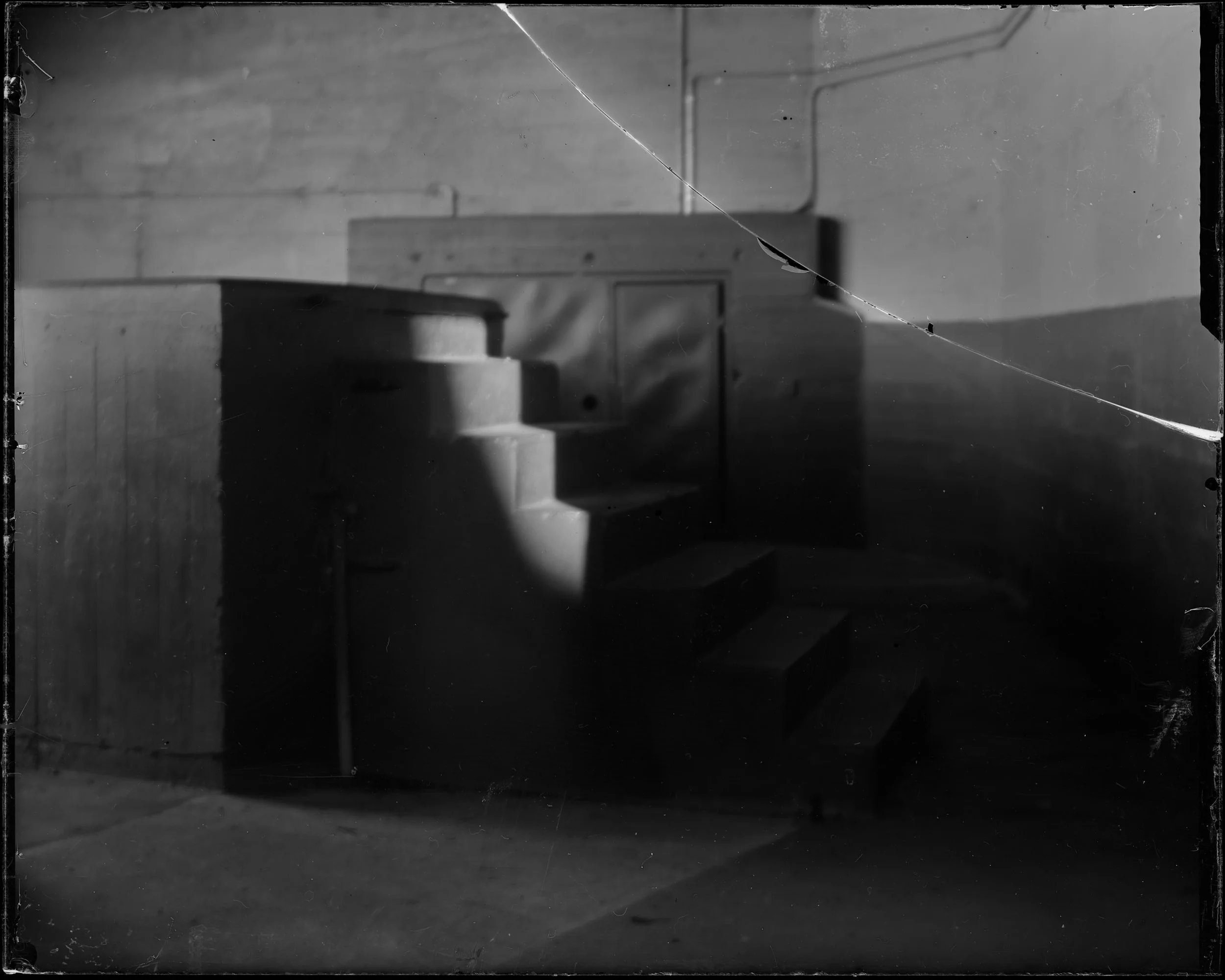
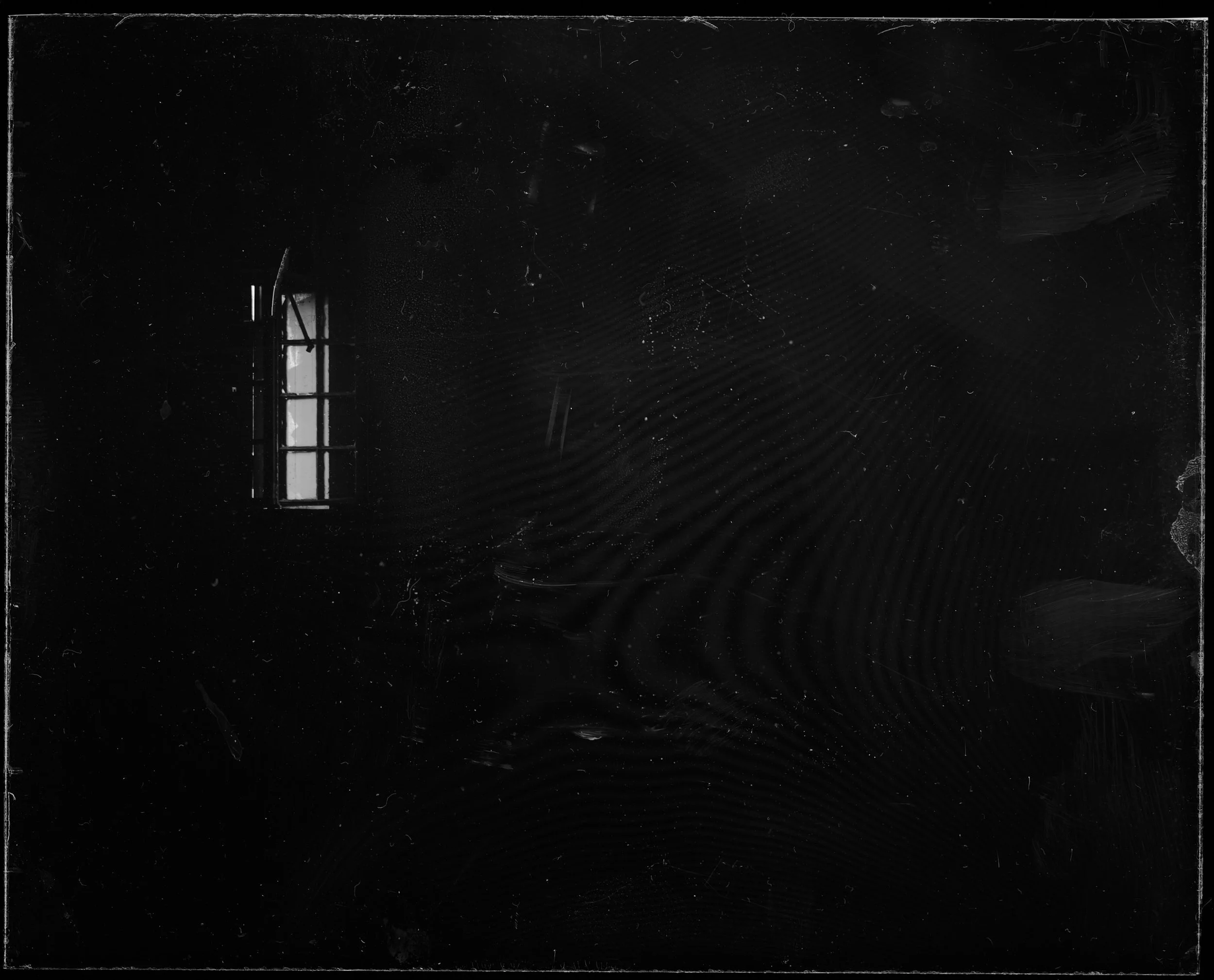
A couple of weeks ago, I bought some dry plates from Zebra Plates and spent some time in their darkroom fitting the first two into a holder for my 4×5 camera. I had a few issues getting them in, as the holder seemed a bit tight, so they weren’t fitted correctly. More on that later!
Last weekend, I took my camera to Godley Head to try out the dry plates. It’s got some interesting Second World War buildings, like old gun emplacements. Foolishly, I used my antique 1890s Bistigmat lens, which has no shutter and somewhat undefined aperture settings. I thought the long exposures would compensate for the lack of a shutter. Both shots were taken inside the buildings with exposures between 5 and 20 seconds, using the dry plates rated at ISO 2!
On Friday evening, I developed the two dry plates at Photosynthesis using Ilford ID-11 developer. First, I had to remove them from the holders, which I discovered were not in the holder correctly. After some fiddling, I managed to get both out, but broke one of the glass plates. Unfortunately, the broken plate was the best-exposed image; my first one was underexposed mainly because I didn’t know the actual aperture on the lens. I also failed to move the focus on the Bistigmat lens from focus to picture, so the images were exposed reasonably but not very well in focus.
There were lots of issues, entirely my fault, but I learned a lot. My second attempt to fit the plates in the holder last night was much more successful. They went in smoothly and came out easily as well. I also plan to use one of my normal lines for my next experiment to reduce the number of variables.